
Patrol
It continues. It has its own record.
Industrial sites and ports
Large sites are guarded from one centre. When an alarm goes off the drone is on the spot within a minute and the operator decides whether to send a response. They need to know they see now.
Needs: Fleet from one centreControl from a centreEvidence after the flight
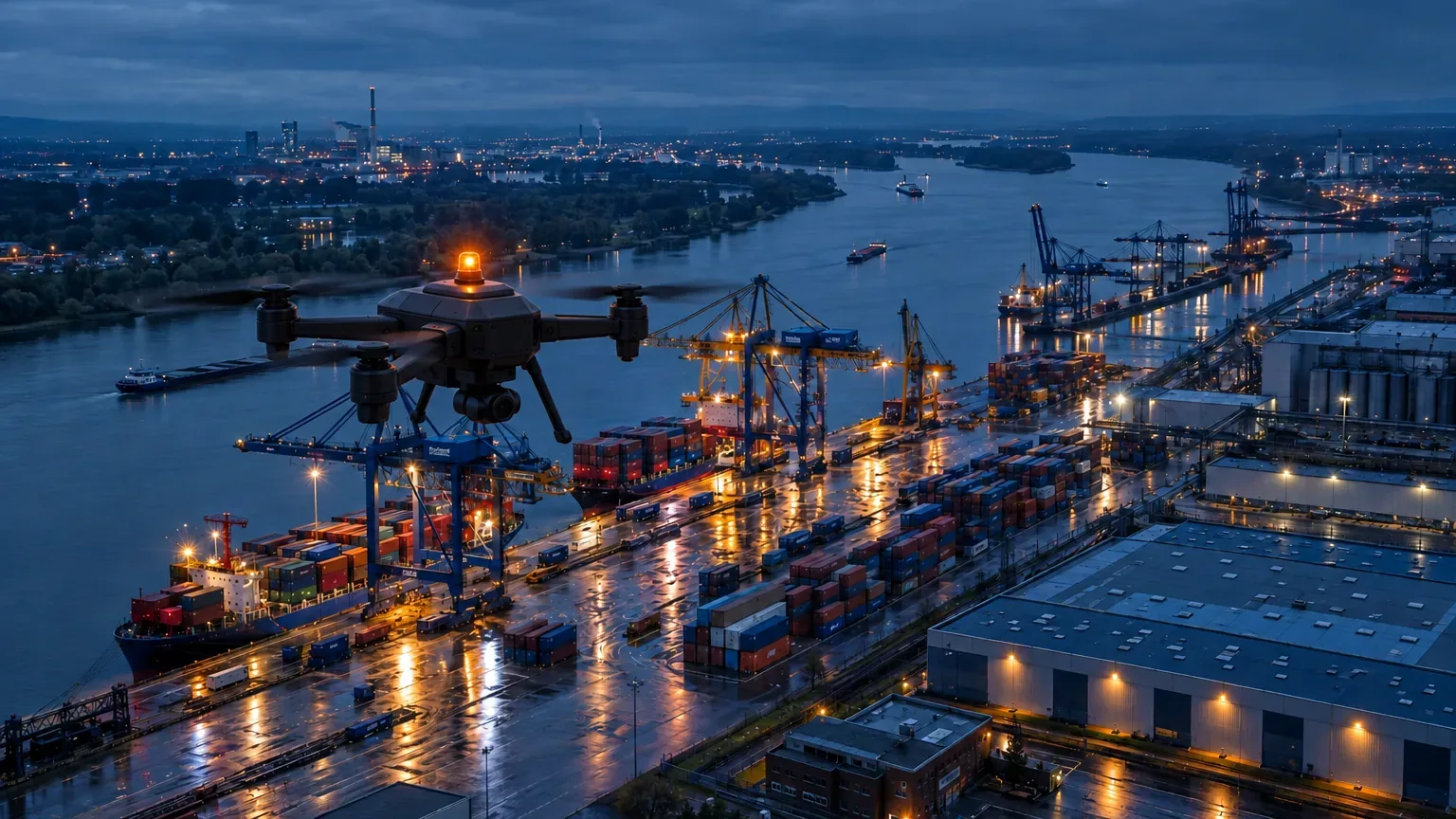
Illustrative case study
This is not a customer and not a flight that happened. It is a description of how this area would read if the image carried its age.
A site with halls, an illustration
At night a patrol flies between halls. A fence sensor launches a second drone. An operator in another city must know which image belongs to which sensor.
Metal and halls break the signal over a short stretch. In the example that stretch jumps over the target. The alarm stays open until there is a valid image or a patrol.
In the morning the report shows stretches where the image repeatedly lost freshness. It is not an insurance claim.
It continues. It has its own record.
Its own age, its own pack.
Only from Valid.
Night lights depend on the drone. AKIZU has not verified them.
The chart requires JavaScript.
The chart is a simulation. Move the slowdown and see when the example stops being under the 50 ms target. The target is not a measured result.
Deployment schematic
The schematic is not to scale and is not a design for a specific site. It shows where the drone is, which two networks carry the frame and where the decision is made.
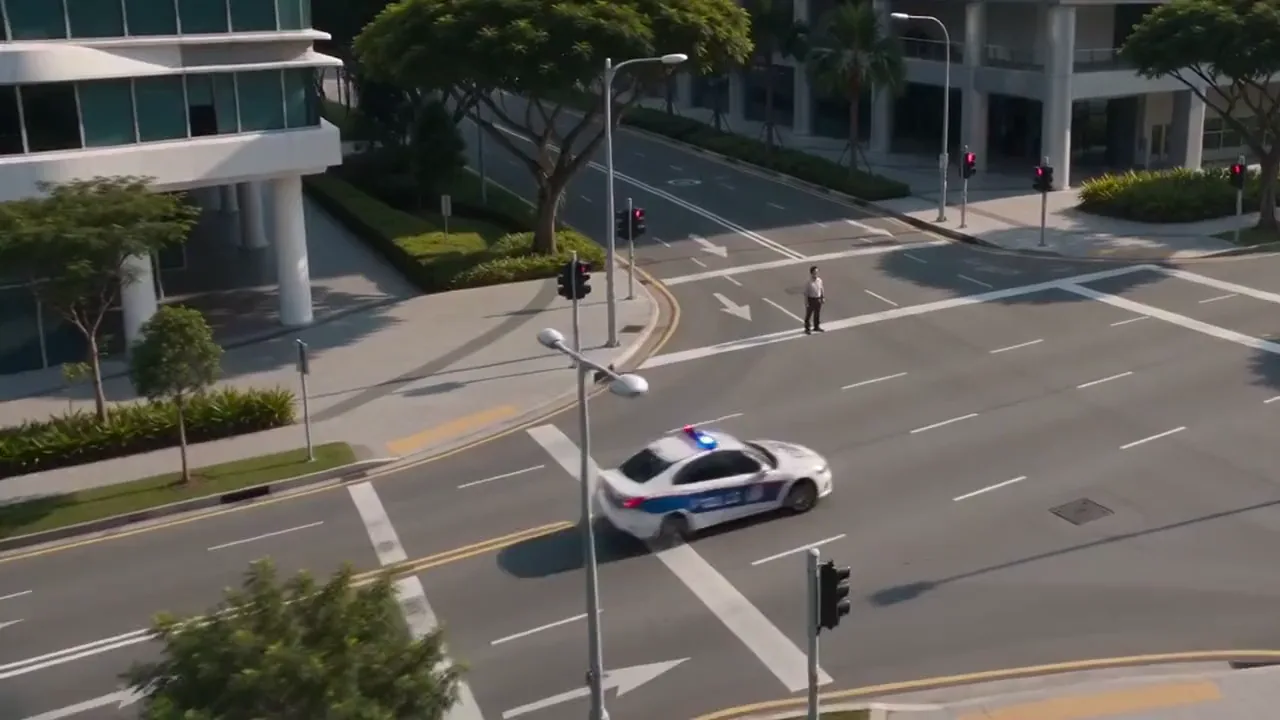
Red and blue beacons: police, state, the military in training. Orange: everyone else. The blink is only on screen. Schematic, design. The list beside it explains the codes in the drawing. The beacon is a payload from another maker, not an AKIZU product.
Concrete case
The same illustrative case as above, written out in time. The times are an example. It is not a record of a flight that happened.
An illustration, not a deployment record. N
Use options
Each row is a separate use. The Parts column says which AKIZU parts it would involve. Status N is a design, C is a target, U is unknown.
| Use | Who uses it | What AKIZU supplies | Parts | Status |
|---|---|---|---|---|
| A night site patrol | Plant security | Age on every stretch of the route | Brain, SIM, Platform | N |
| An alarm from a sensor | Operations centre | Its own age and pack for the alarm | Brain, Platform, Direct | N |
| A port and a container yard | Port operator | Stretches among metal named before the flight | Brain, SIM | N |
| A check after a leak | Operations | An image with age before a person goes in | Brain, Direct | N |
| Verified night lights | — | Depends on the drone, not verified | — | U |
None of these uses is deployed today. A row is not an offer and not an authorisation to fly.
01
Cranes, containers and halls reflect the signal. The link fluctuates over short stretches.
The image travels over the network to a monitoring centre, sometimes in another city. Delay is invisible.
After an incident you need to show what the operator saw, when and how old the image was.
Two drones on the site. The operator must know which image belongs to which sensor.
The same situation, different information on the screen. Proposed behaviour, to be verified in a pilot.
| Situation | Without AKIZU | With AKIZU |
|---|---|---|
| The image is late | The image looks live; the pilot does not know how old it is. | Frame age is on the screen and the state changes to Reduced freshness. N |
| Several drones, one team | The operator does not know which image is current. | Every drone has its own age and state. An old image is not treated as confirmation. N |
| The pilot is in a centre far from the drone | Latency changes and the pilot cannot see it. | The deadline guard warns when a command arrives late. N |
| You need to explain what happened | Video without exposure time and without commands. | Evidence package with image age, states and commands. N |
02
The flow is illustrative. AKIZU is in development.
03
How many metres further the drone is than the image shows. Pick a scenario or set the speed and image age.
The interactive calculation requires JavaScript.
Scenario speeds are examples. 87.4 ms is the p99 measured internally over WiFi with a phone as transmitter, not on a drone.
04
| Requirement | How AKIZU answers it | Status |
|---|---|---|
| Image for a remote centre | Image age and three states in Direct | N |
| Signal between halls and cranes | Two networks at once, switching without image loss | N |
| Record of an incident | Evidence pack attached to the alarm | N |
| Night operation | Camera and lights depend on the drone, not verified by AKIZU | U |
05
Knows whether they see the situation now and decides on the response.
Has a record of every alarm for insurers and police.
Sees the segments where coverage needs improving.
06
07
In September 2025 Aker Solutions obtained European certification for beyond-line-of-sight flights for inspections of platforms, yards and plants.
Source: Smart Maritime Network
Percepto reports approvals for remotely operated flights in Italy and Portugal.
Source: Percepto
Network latency is only part of the journey. Image age is the time from frame exposure on the drone to its display to the operator. VERA attaches the exposure time to every frame and the station verifies it before display.
The AKIZU design is built around LTE and 5G. According to the manufacturer, the Starling 2 Max base platform also supports Wi-Fi and Microhard. Our internal measurement was done over WiFi.
We plan to offer AKIZU Verify measurement once optical measurement is validated. If you are interested, write to us and we will put you on the early list.
09
The three image states in this area. Proposed behaviour, to be verified in a pilot.
The operator can decide on a response.
They know the image is late and do not treat it as live.
The alarm stays open until there is a valid image or a patrol.
10
Illustrative layout. Drone and station counts are an example, not an offer.
Station on the site
A regular route between halls.
Second station
Flies to the sensor. Its image has its own age.
Another city
One screen, several drones, none without a state.
11
Times are an example. They show when image age decides.
12
AKIZU does not send a response team.
The pack is evidence, not a claim.
Camera and lights depend on the drone. AKIZU has not verified them.
A pilot in this area
We are looking for first partners. The application is pre-filled for this area.
Other areas
Example deployments are illustrative. AKIZU is in development and does not replace a BVLOS authorisation.
In more detail
A patrol and an alarm are two records. They are not mixed.
Metal and halls break the signal over a short stretch. That stretch should be named before the flight, not inferred from an average.
The alarm stays open until there is a valid image or a patrol. It is not an insurance claim.
Explore
Twelve solution areas and the sections that belong with them. The case studies are illustrations, not completed deployments.