
Add-ons
Add-ons you attach to the drone and its Brain
Beacons, searchlights, 3D scanners, flight broadcast units like those on aircraft, loudspeakers, directional microphones, autonomous docks and sensors from gas to radiation. Brain powers them, reads their data with a capture time, and the operator controls them from the Direct cockpit.
NProposed integration catalogue
01
How an add-on joins the chain
Add-ons are mostly third-party products. AKIZU proposes one way to mount, power, read and control them, so that a sensor reading behaves like a camera frame: with a capture time and an age.
- MountingA mounting rail or lower bay on the drone body. Weight and centre of gravity are checked for every add-on.
- PowerFrom the drone battery through Brain with protection. High-draw add-ons such as a searchlight get their own energy budget.
- Data into BrainBrain reads the value, stamps it with its capture time and sends it together with the video over VERA.
- Control and recordThe operator switches the add-on on in the Direct cockpit. Platform records who used it and when.
A sensor reading has an age, like a frame
A gas, temperature or distance value is useful only when you know when it was taken. Brain attaches the measurement time to every value. The cockpit then shows whether a reading is fresh and does not present an old reading as current.
02
Add-ons by purpose
Pick a group. Each add-on lists what it does, where it is used and how it connects to Brain.

Beacons and lights
Police warning beacons N
Red and blue flashing lights that mark the drone of an authorised service during an operation, convoy escort or closure.
- Where it is used
- Police, state and armed forces in training, VIP convoy escort.
- Connection to Brain
- Switching and flash pattern from the cockpit, state in the mission record.
Orange warning beacons N
Orange flashing for other operators: inspections, construction, logistics and roadside work.
- Where it is used
- Inspections, industry, logistics, events.
- Connection to Brain
- Switched from the cockpit or automatically at take-off.
Searchlight and floodlight N
A powerful spot or flood light with an adjustable angle to light an incident, a route or a search area.
- Where it is used
- Night search, accidents, perimeters, rescue work.
- Connection to Brain
- Brightness and angle from the cockpit, own energy budget.
Infrared illuminator N
Light invisible to the eye that helps night-vision cameras without disturbing the surroundings.
- Where it is used
- Night patrols, site protection, search.
- Connection to Brain
- Switched together with the camera night mode.
Anti-collision and navigation lights N
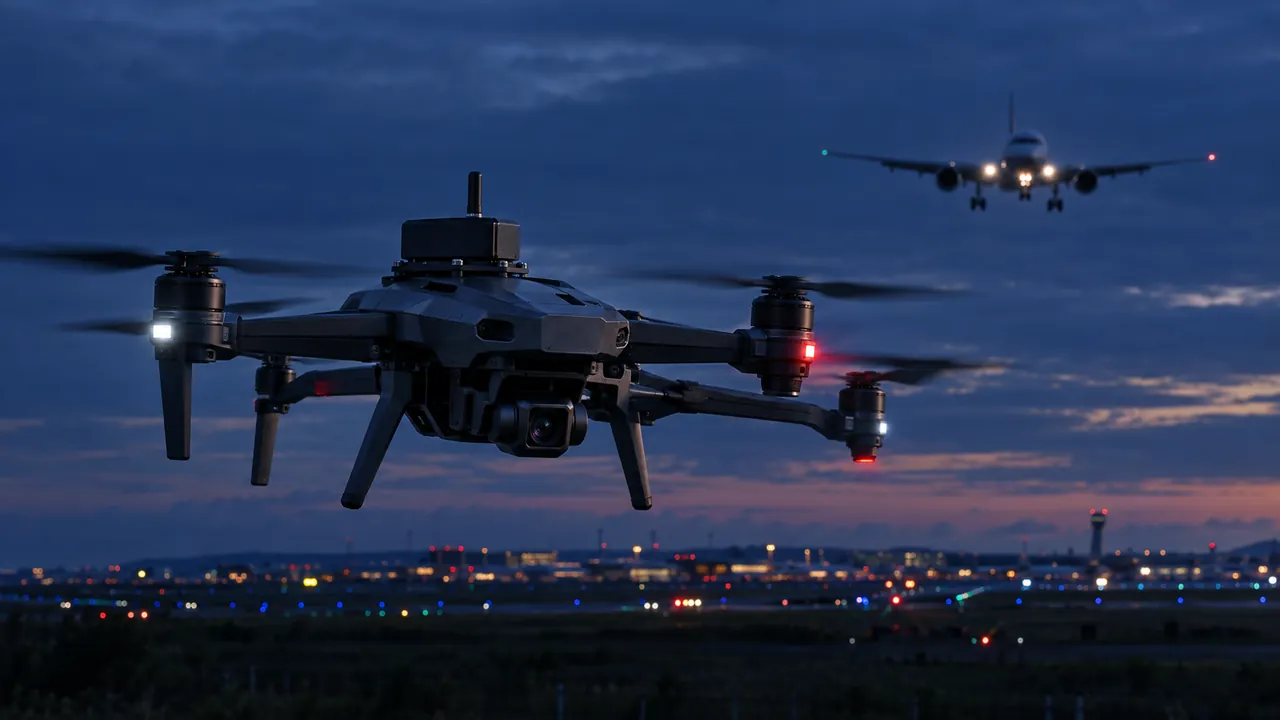
Flashing lights that make the drone visible to other aircraft and people, especially at night.
- Where it is used
- Every night flight, flights near airports.
- Connection to Brain
- Automatic at take-off, checked in the flight checklist.
Airspace visibility
ADS-B Out flight broadcast unit N
Broadcasts the drone position and altitude like a conventional aircraft so that air traffic control and other aircraft can see it.
- Where it is used
- Flights near airports, in controlled airspace, alongside rescue helicopters.
- Connection to Brain
- Brain supplies position and identity, used only with permission.
ADS-B In receiver N
Receives signals from nearby aircraft and shows them in the cockpit so the operator sees an approaching helicopter or aircraft.
- Where it is used
- Rescue operations, flights near airports, long routes.
- Connection to Brain
- Nearby aircraft as a cockpit layer with data age.
Direct remote identification N
Broadcasts the drone and operator identity, as EU rules require for many drone classes.
- Where it is used
- Most operations in the EU.
- Connection to Brain
- Brain supplies identity and position, state in the readiness check.
Sound and voice
Loudspeaker N
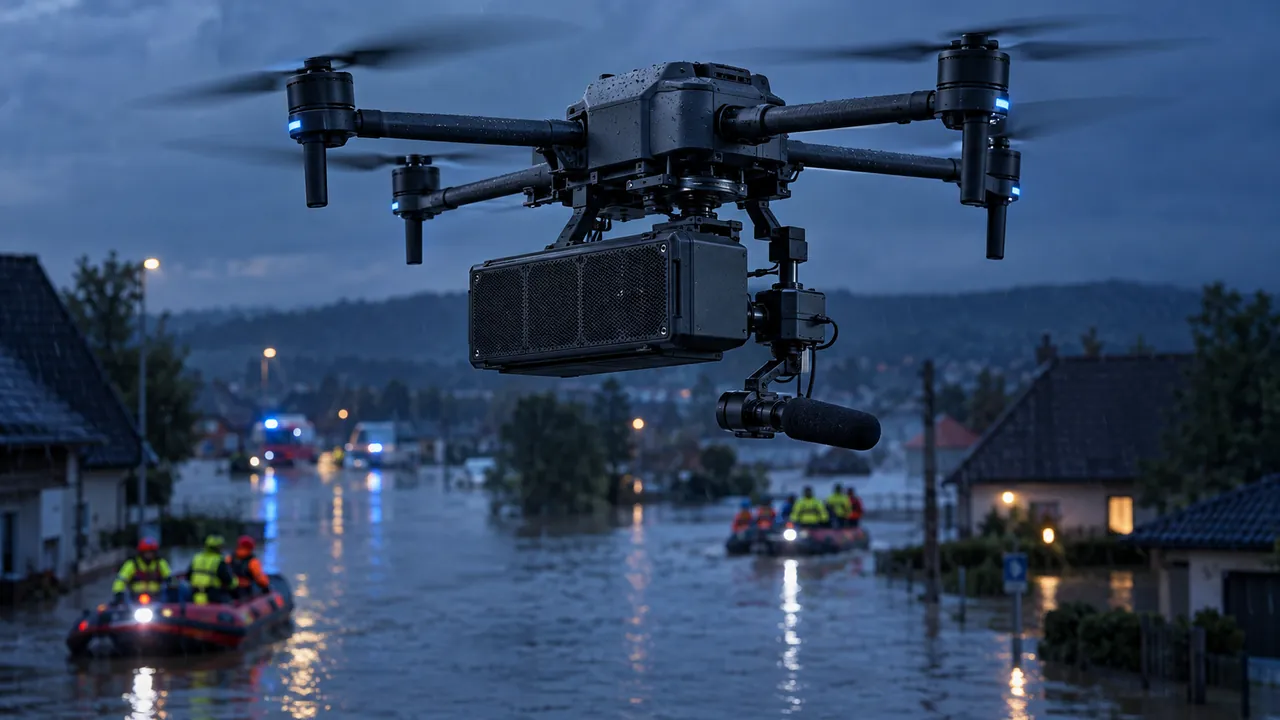
Loud announcements from the drone: evacuation instructions, calls during a search, warnings at an event.
- Where it is used
- Floods, fires, search, events, closures.
- Connection to Brain
- Live operator voice or prepared messages from the cockpit.
Directional microphone N
A microphone aimed at one spot that helps hear a call for help or the sound of a machine.
- Where it is used
- Search for people, machine inspection.
- Connection to Brain
- Sound with capture time alongside the video, used under data protection rules.
Acoustic sensor array N
Several microphones that find the direction of a sound, such as a call or an equipment fault.
- Where it is used
- Search, industry, site protection.
- Connection to Brain
- Sound direction as a marker in the cockpit image.
3D scanning and mapping
LiDAR 3D scanner N
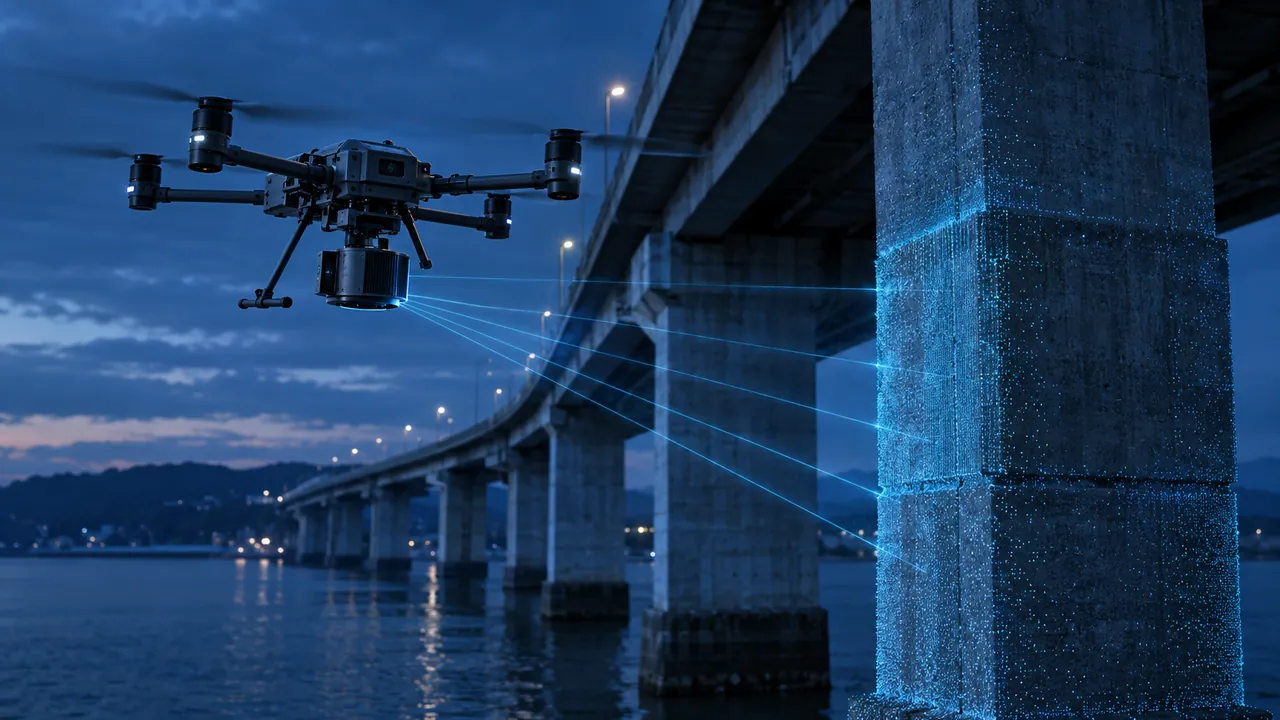
A laser scanner that builds an accurate spatial model of a bridge, mast, building or terrain from the air.
- Where it is used
- Bridge inspection, energy, construction, accidents.
- Connection to Brain
- Brain logs scan data with time and position for later processing.
Photogrammetry camera N
A high-resolution camera for images that are stitched into a map or 3D model.
- Where it is used
- Mapping, construction, accident documentation.
- Connection to Brain
- Triggered along the route, images with time and position.
Multispectral camera N
A camera that captures several light bands and shows vegetation health, moisture or pollution.
- Where it is used
- Agriculture, forests, environment.
- Connection to Brain
- Images with time and position into Platform.
Sensors
Thermal camera N
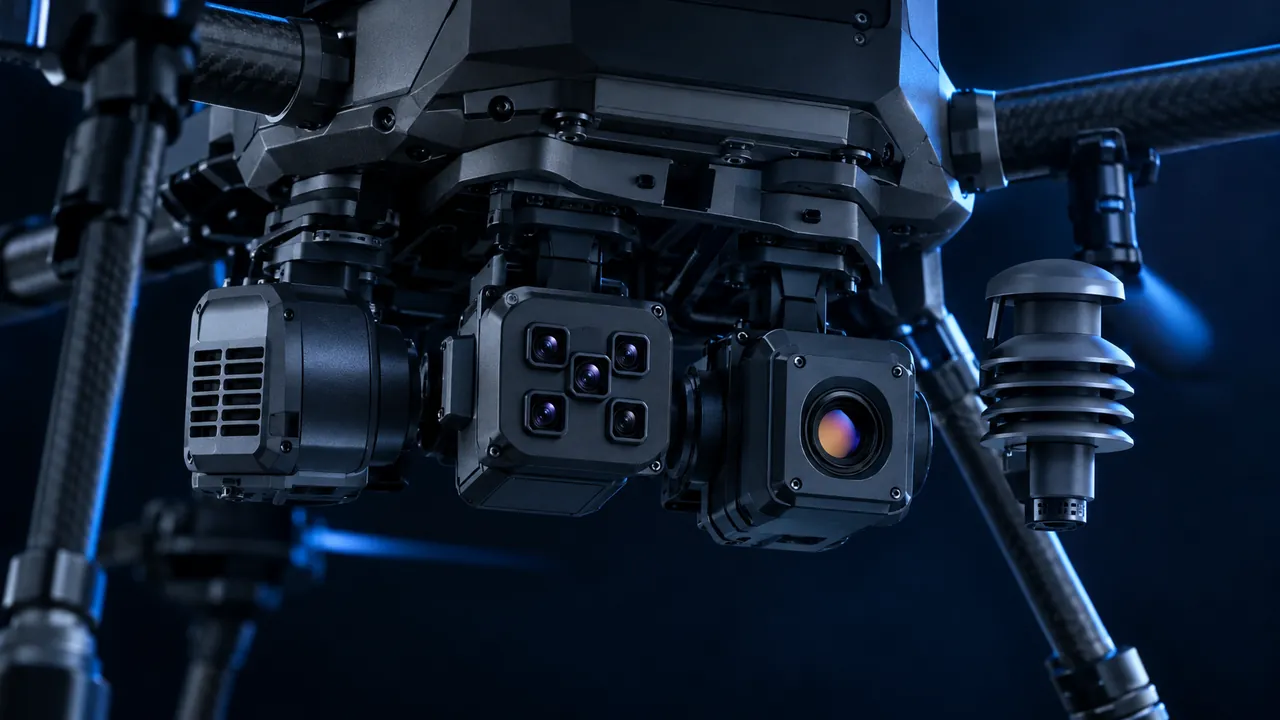
A camera that shows heat: people in the dark, overheating lines, fire hotspots.
- Where it is used
- Search, fire, energy, perimeters.
- Connection to Brain
- A second video channel with frame age like the main camera.
Gas detector N
Measures gas concentrations such as methane, carbon monoxide or hydrogen sulphide during a leak or fire.
- Where it is used
- Industry, pipelines, fire, accidents.
- Connection to Brain
- Values with measurement time, alert thresholds in the cockpit.
Dosimeter and CBRN sensors N
Measures radiation and other hazardous substances without sending people into the area.
- Where it is used
- Accidents, civil protection, training.
- Connection to Brain
- Values with time and position, map of measured points.
Air quality N
Measures particulate matter and other pollution at height and above ground.
- Where it is used
- Cities, industry, fires.
- Connection to Brain
- Values with measurement time into Platform.
Onboard weather station N
Measures wind, temperature and humidity on the drone itself, where they can differ from the ground.
- Where it is used
- Every flight near weather limits, inspections at height.
- Connection to Brain
- Data into the Platform weather tab, with data age.
Altimeter and obstacle sensors N
Radar or laser that measures distance to the ground and obstacles when flying low or in the dark.
- Where it is used
- Inspections, urban flights, landing.
- Connection to Brain
- Distances as a cockpit layer.
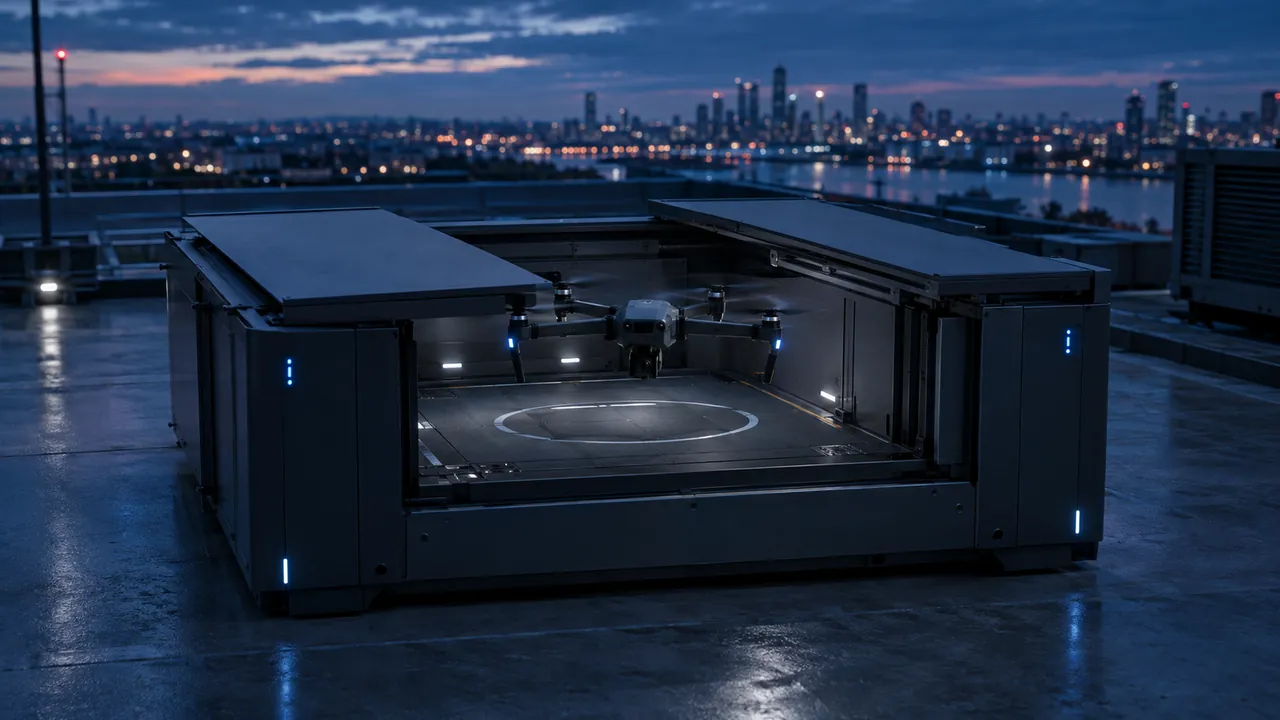
Docks and ground equipment
Autonomous dock (garage) N
A closed box with a roof that opens by itself. The drone lands in it, charges and waits for the next mission.
- Where it is used
- Airports, ports, industrial sites, borders.
- Connection to Brain
- Dock state, weather and charge in Platform, opening from the cockpit.
Battery-swap dock N
A dock that swaps the battery instead of charging, so the drone can take off again right away.
- Where it is used
- Continuous patrols, large sites.
- Connection to Brain
- Battery count and state in the readiness check.
Tether N
A cable that powers the drone from the ground and allows long hovering over one spot.
- Where it is used
- Events, long operations, temporary overwatch.
- Connection to Brain
- Power and cable state in the cockpit.
Portable landing pad N
A folding pad with markings and lights for safe take-off and landing in the field.
- Where it is used
- Operations outside cities, training.
- Connection to Brain
- Pad position as a return point in the mission.

Payload and flight safety
Drop release and winch N
Lowers or drops a small load: a life jacket, medicine, a radio or a medical box.
- Where it is used
- Water rescue, mountain rescue, medical transport.
- Connection to Brain
- Release only on a confirmed command from the cockpit.
Parachute recovery system N
A parachute that opens on a serious failure and lowers the risk to people on the ground.
- Where it is used
- Flights over people, cities, specific category.
- Connection to Brain
- Brain monitors the flight and reports parachute readiness.
Gimbal with optical zoom N
A stabilised camera with strong optical zoom for detail from a safe distance.
- Where it is used
- Inspections, perimeters, traffic accidents.
- Connection to Brain
- Zoom from the cockpit, frame age like the main camera.
03
What to know before use
What AKIZU proposes
- One way to mount, power and read data through Brain.
- Add-on control from the Direct cockpit and a usage record in Platform.
- A capture time on every sensor value.
- Add-on choice by solution and operating category.
What does not apply
- Add-ons are not certified together with the drone. Compatibility is checked per type.
- Red and blue beacons may only be used by authorised services under national rules.
- An ADS-B Out flight broadcast unit is used only with permission and under airspace rules.
- Microphones and cameras are subject to data protection. AKIZU does not replace an impact assessment.
- An added payload changes the weight and risk of the flight, which can affect the operating category.
Information on rules is simplified and is not legal advice.
Complementary productsField, Relay, Vault, Academy and Care: field station, coverage, evidence, training and service.More products →Add-ons on this page are integration proposals (N). Most are third-party products and we state no performance. Images are visualisations.
Explore
Explore every area and the other sections
Twelve solution areas and the sections that belong with them. The case studies are illustrations, not completed deployments.
Solutions
Other sections
Book a demo
See how old your image really is.
We will show the system live or measure the image age on your drone.